

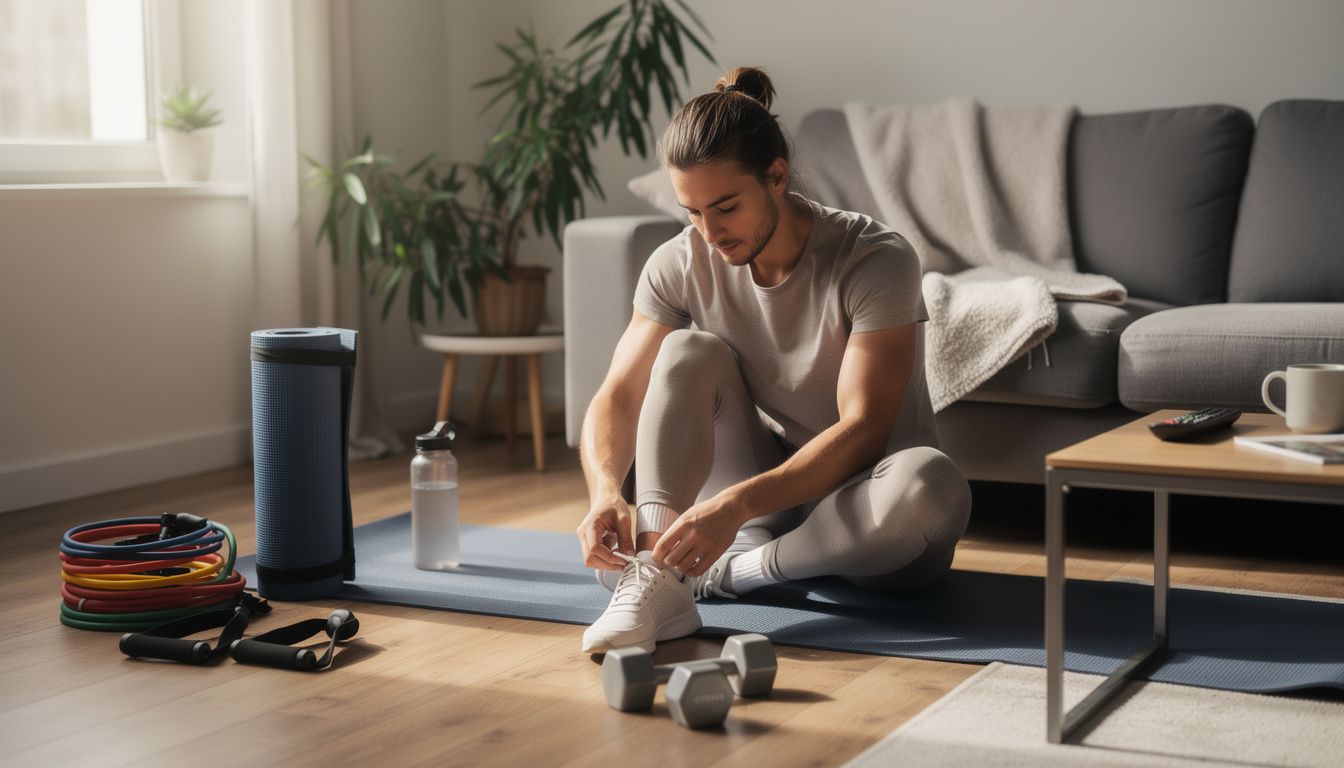
A simple home workout habit can help, yet social media often sells it as a flawless fix. A plan that promises results with no limits hides a weakness in the fine print, so the routine may not fit real life.
Reading this article helps people weigh both strength and weak spots, because “easy” routines can still clash with time and recovery. The goal stays clear thinking, not wishful claims.
A balanced look at a simple home workout habit helps households name the tradeoffs, not just the promises, and it shapes daily choices. The routine can help sleep and keep bodies moving, but it can also hurt stiff knees, strain the back, or lead to skipped days. Evidence often comes in indirect ways, so results change across bodies and weeks, and no plan fits every home.
Small spaces, shared schedules, and noise from other rooms shrink training time, which shifts what “enough” feels like. When stress and caregiving pile up, the same workout can bring recovery for one person, while it becomes a chore for someone else.
Small Routine Workouts Fit Real Life Days
Small routines fit real life, and a simple home workout habit works best when it’ s treated like a household system rather than a rare special event. Instead of relying on motivation that shows up unpredictably, the habit becomes part of the day’ s flow, the same way other chores and routines do. Convenience is a major advantage. Staying at home removes travel friction, so movement can happen between tasks. For example, a 10-minute circuit can fit while laundry runs, or a quick set of exercises can slide into the gap between errands and cleanup. A low barrier also matters. When workouts are short and manageable, they feel safer to begin, and it’ s easier to reduce the fear of “getting it wrong.” That sense of ease makes progress feel more attainable, even on days when energy is limited.
Schedule flexibility strengthens the habit. Because it doesn’ t depend on a fixed class or location, it can shift around caregiving responsibilities, work shifts, or school runs. On busy days, the workout can be split into two mini sessions without losing momentum. Privacy adds another layer of support. Training at home avoids social pressure and helps maintain consistency when confidence dips, even during busy family gatherings. Together, these factors make consistency more likely. The habit can connect to daily cues, and starting each routine right after brushing teeth turns a good intention into a repeatable pattern.

When A Simple Home Workout Habit Works Best
Experts and critics agree that a simple home workout habit works best when people face trade offs openly. Convenience also brings a key cost yaitu schedules that fit daily life can raise follow through, yet easy routines can lower intensity and slow progress. Training then turns into gentle upkeep instead of real work.
Flexibility versus structure forms another key pair. Home routines can adapt to care needs and changing work demands, but unclear signals for effort and rest let discipline drift. “Whatever happens today” becomes the plan, and missed sessions start to feel normal. No equipment simplicity also competes with exercise variety.
Low cost lowers barriers, but limited movement patterns can flatten gains, especially for strength, balance, and joint comfort. These critiques matter because stakeholders judge results as behavior plus design, not motivation alone. To see where a simple home workout habit helps or harms, the habit should run like a small test.
They should track effort level, progress across weeks, and whether workouts still challenge the body safely. When intensity falls, progression can return through added reps, slower moves, or shorter rests. Variety can stay strong by rotating push, hinge, squat, and carry style drills across the week.
Q: How can I judge my Simple home workout habit strengths without bias?
A: Track consistency, comfort, and measurable progress, compare weeks, not moods.
Q: What weaknesses matter most for my Simple home workout habit?
A: Identify missed muscles, low intensity, and poor recovery, adjust for your goals.
Q: How do I spot habits that look good but don’t work?
A: If you feel no challenge, skip progress markers and change the plan.
Q: Should I trust “science says” claims about Simple home workout habit?
A: Don’t rely on broad “science says” headlines, uncertainty is real, and results vary.
Q: Is a Simple home workout habit suitable for beginners?
A: Yes, start with low-impact moves and short sessions you can repeat.
Q: Can it work for busy people?
A: Yes, plan tiny workouts and use “minimum days” to maintain momentum.
Q: Is it safe if I have joint pain?
A: Often yes with gentle ranges, but stop if pain worsens.
Q: When should I change the routine?
A: Change when progress stalls for weeks or boredom reduces effort.
A simple home workout habit brings steady wins with low friction, quick recovery after “missed days,” and clear skill practice at home. Its limits show up as lower intensity, fewer natural challenges, and a higher risk of plateaus without outside variety. A balanced review beats hype or blanket skepticism, since direct research on this exact behavior stays thin.
People can share a real example of a simple home workout habit, explaining what they tried and what actually worked, along with any parts that didn’ t go as planned. They should also describe what they learned from the experience, so others can follow the approach more confidently.

